ProjectsPersonal
8-inch reflector telescope
Built a Newtonian telescope from a concrete form tube around a primary mirror I inherited from my dad
Equipment used
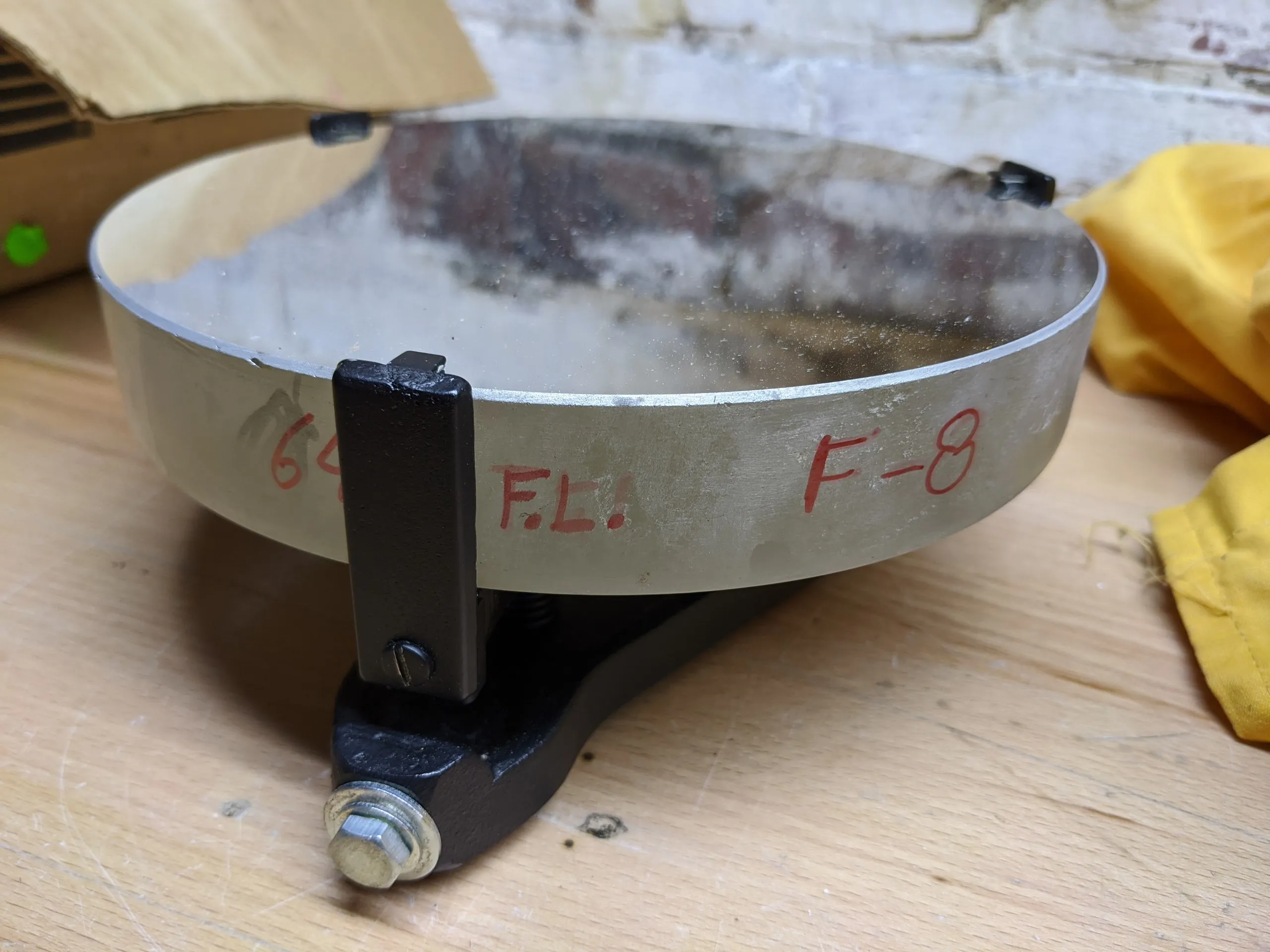
| Primary mirror | 64 1/8 in. focal length, f/8, inherited from my dad |
| Newt for the Web | free software for working out secondary mirror size, focuser height, and tube placement from the primary's specs |
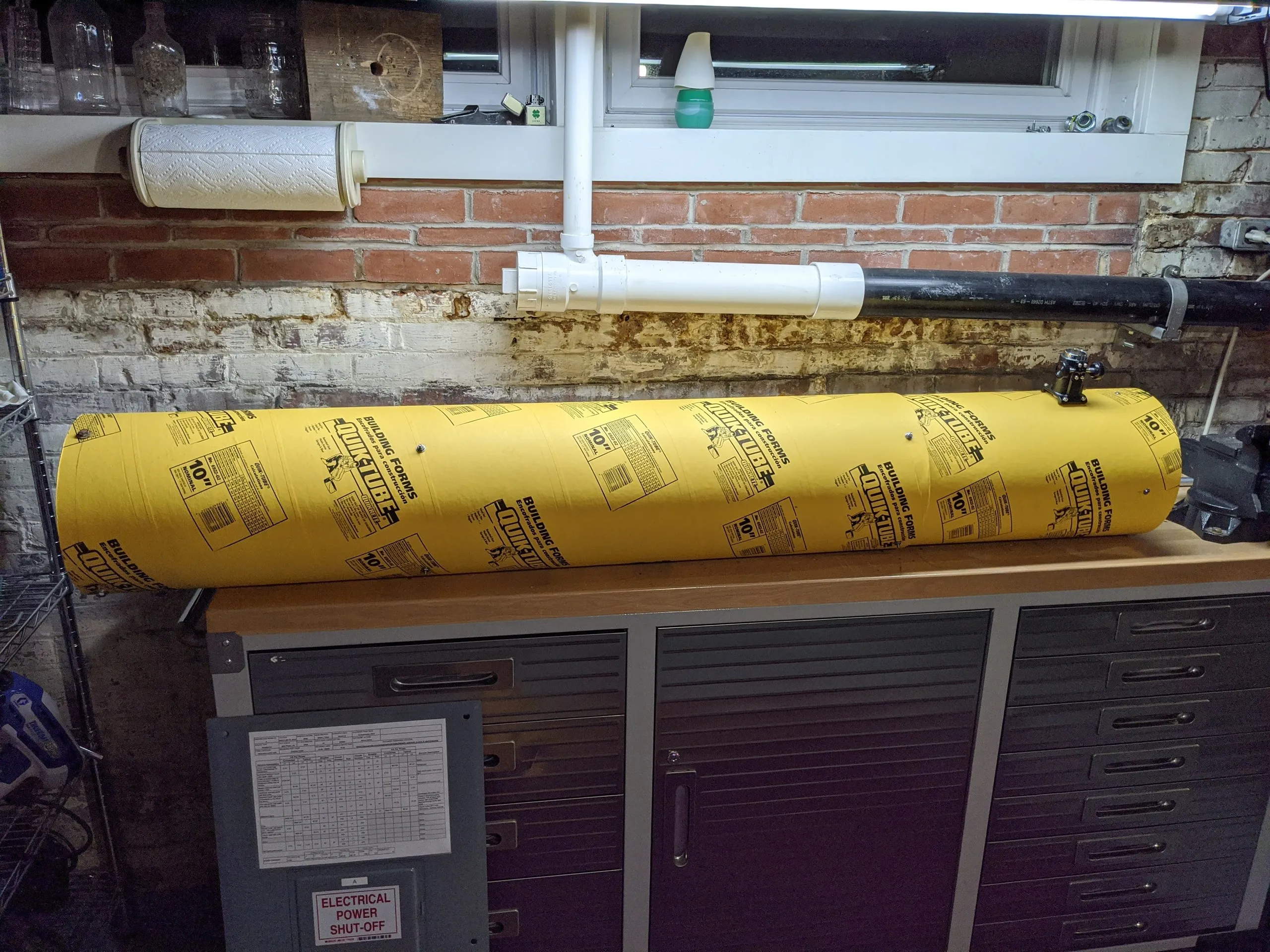
| Quikrete Quik-Tube | 10 in. nominal concrete-form tube, two 4 ft. lengths stacked for the optical tube assembly |
| Photo tripod | repurposed as the mount, no tracking |
Background
My dad bought a telescope mirror years ago, and I inherited it — an 8-inch f/8 primary. It sat around for a while before I decided to build it a telescope.
Confirming the mirror’s specs
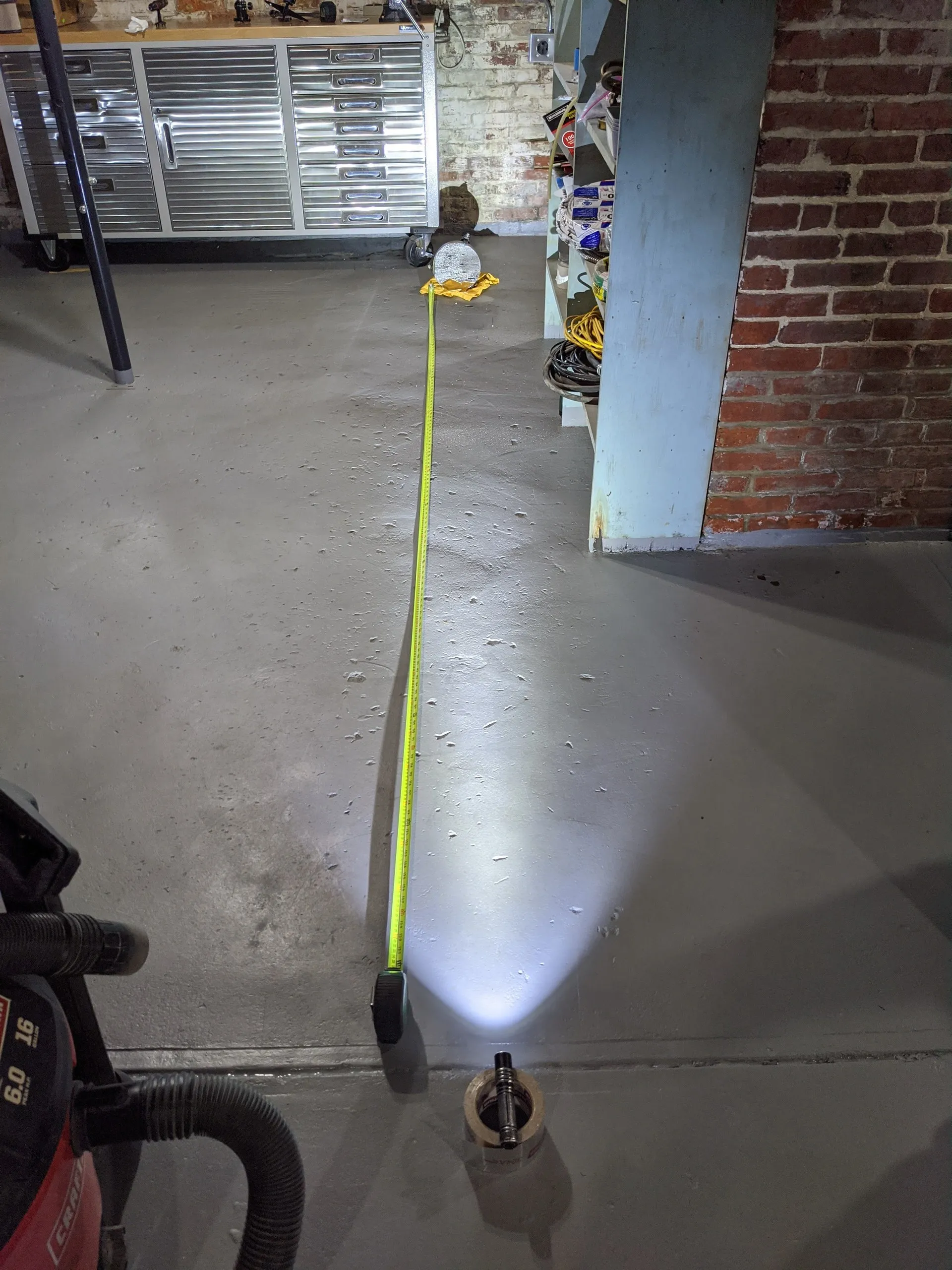
The mirror itself has its vitals scratched into the edge of the glass: focal length and f-ratio, presumably noted by whoever originally figured it. Before trusting decades-old handwriting, I checked it myself — bounced a flashlight off the mirror onto a wall and measured the distance from mirror to focus point with a tape measure. It came out close enough to the marked focal length to trust the number for the rest of the design.
Design
With the focal length and f-ratio confirmed, I used Newt for the Web — free Newtonian telescope design software — to work out everything downstream of the primary: secondary mirror size, its offset and tilt, focuser height, and how far the focuser needed to sit from the front of the tube. It’s meant for exactly this — plug in the primary’s specs and it lays out the rest of the optical train.
Building the tube
For the optical tube assembly I used a 10-inch Quikrete Quik-Tube — a cardboard concrete form tube, sold in fixed lengths at any home center. I bought two 4-foot sections and stacked them to get the length the design called for. It’s stiff, round, and cheap, which is the entire pitch for using one as a Newtonian OTA. Sizing it up from the 8-inch mirror gave enough clearance inside the tube for the focuser drawtube and finder mount without cutting into either.
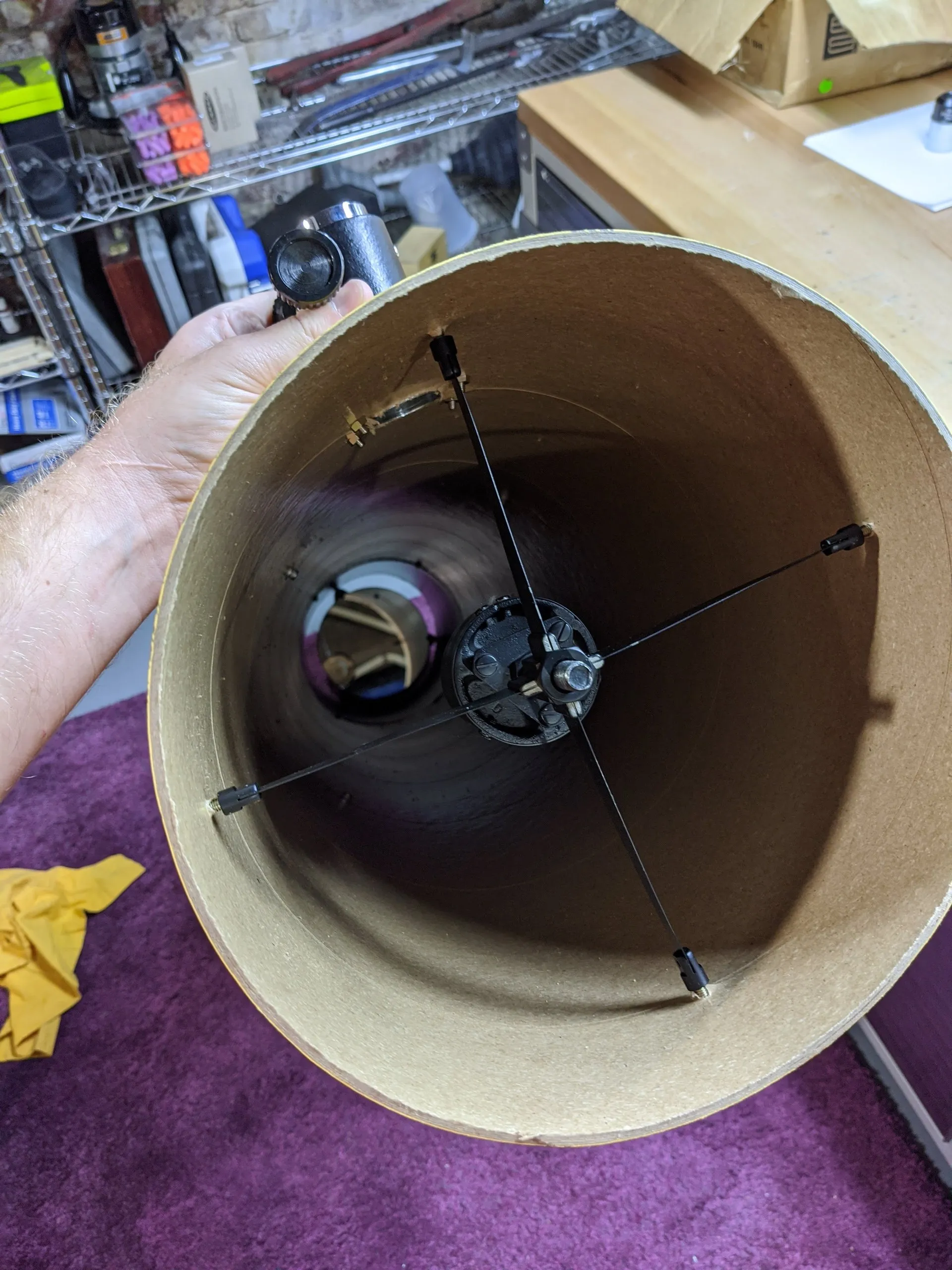
The primary mirror sits in a cell at the back of the tube, held by a spider with the secondary mirror mounted at its center.
A finder scope and rack-and-pinion focuser mount to the side of the tube near the open end.
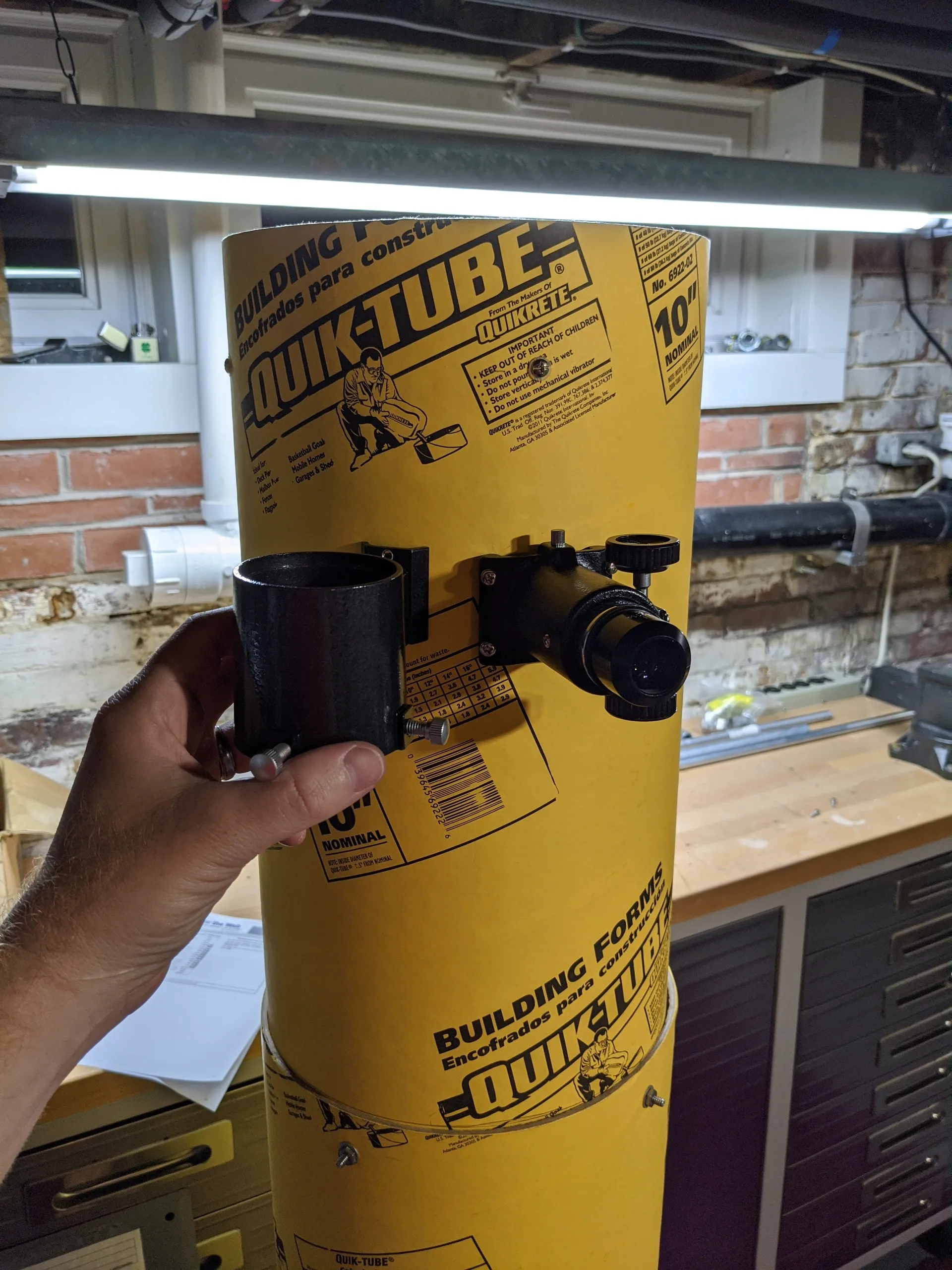
I painted the finished tube black — the yellow Quik-Tube branding is fine on the workbench but does nothing for stray light control once you’re actually observing.
Mount
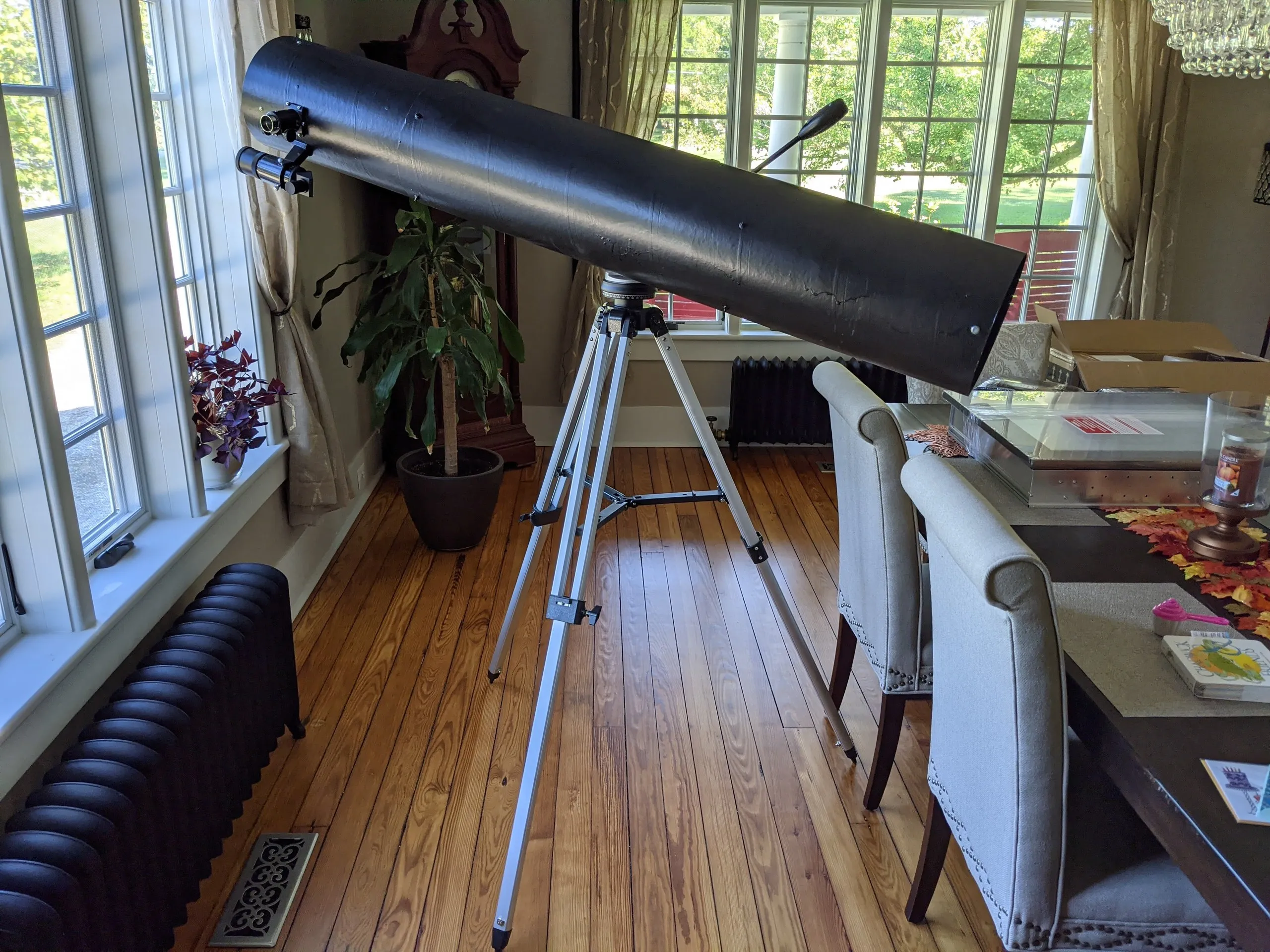
I didn’t build a dedicated mount. The tube sits on a photo tripod, which holds it steady enough to observe but has no tracking. Objects drift out of the field of view quickly, especially at higher magnification, and the tripod head is a little shaky under the tube’s weight. Everything else about the build worked about as well as I’d hoped — the mount is the one piece I’d actually replace with a proper equatorial or dobsonian base if I built this again.
Results
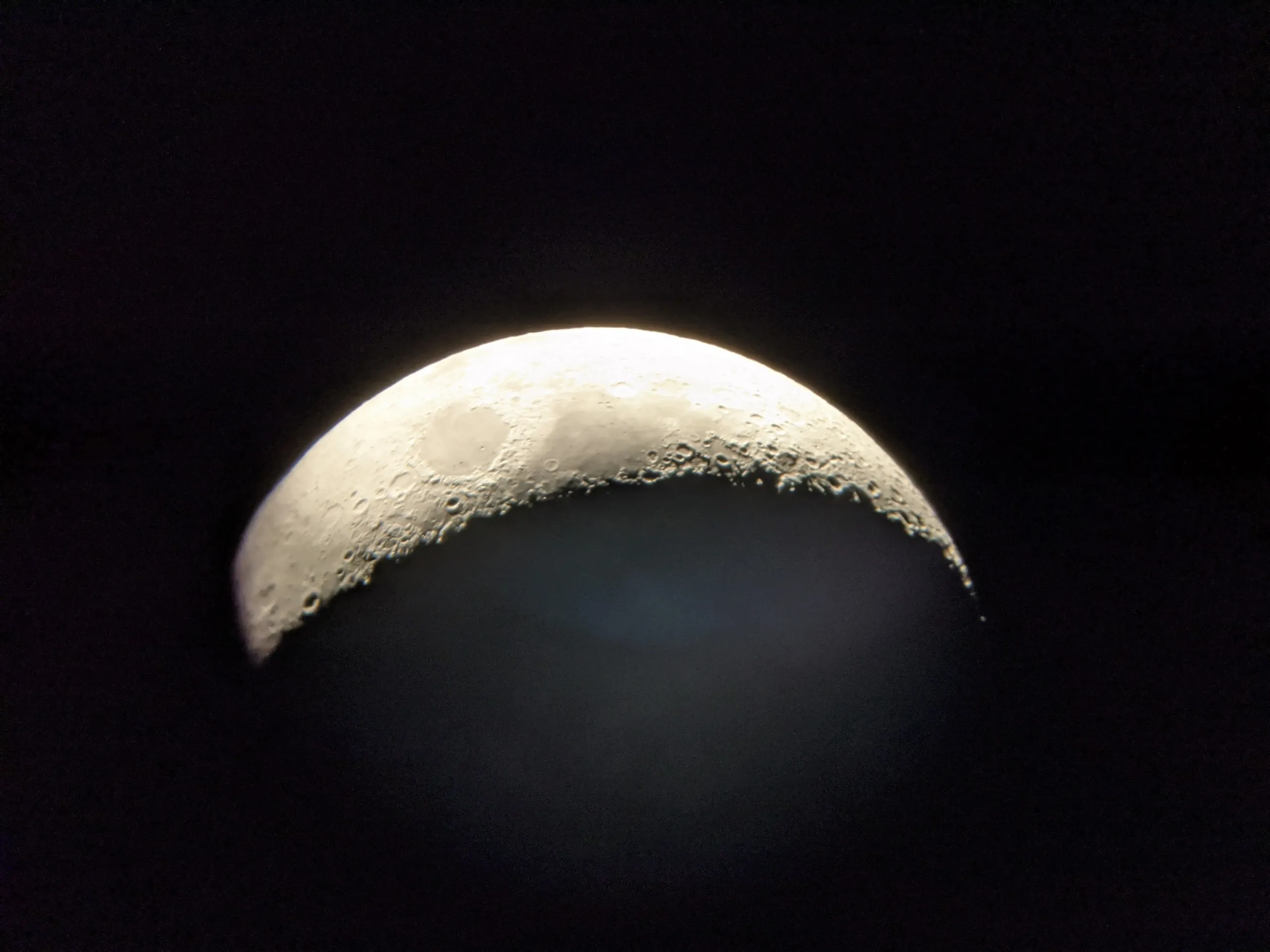
First light and a few months of casual observing later, the views have been good — sharp enough on the moon to pick out crater detail well past what any consumer department-store scope would show.