ProjectsWork
Newcastle gas storage facility
Tomago, NSW, Australia - A liquefied natural gas peak shaver and truck loading facility
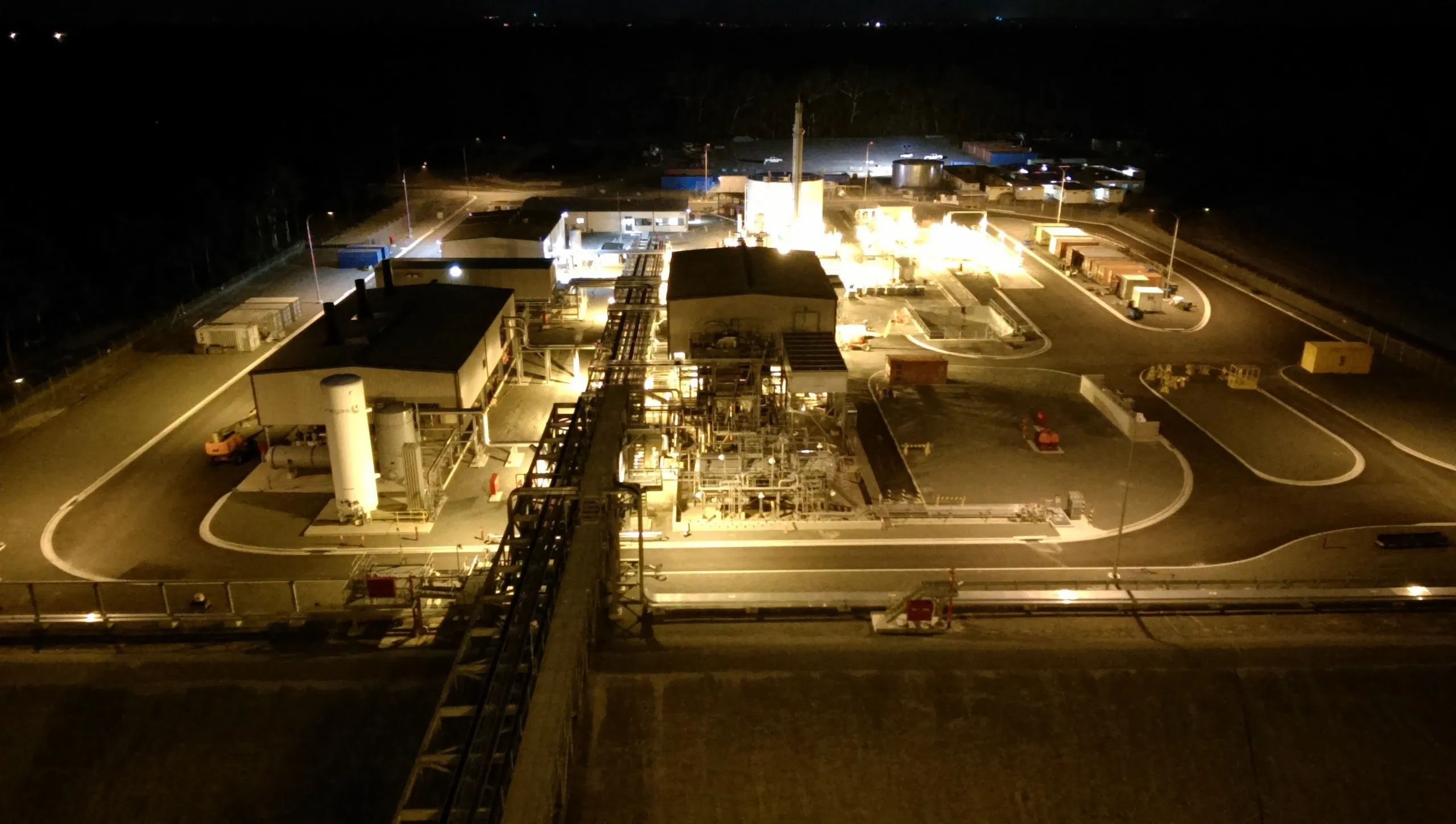

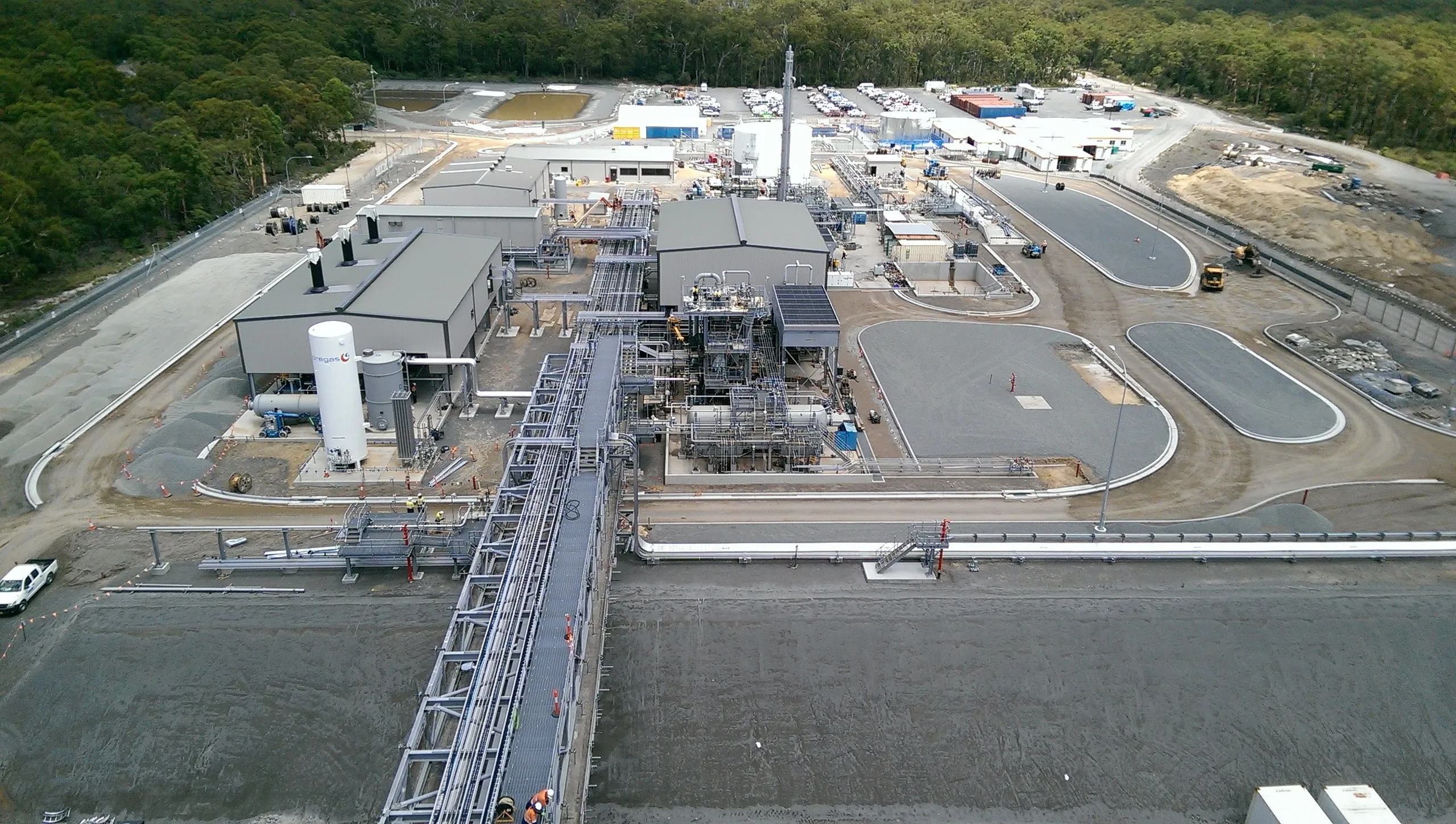
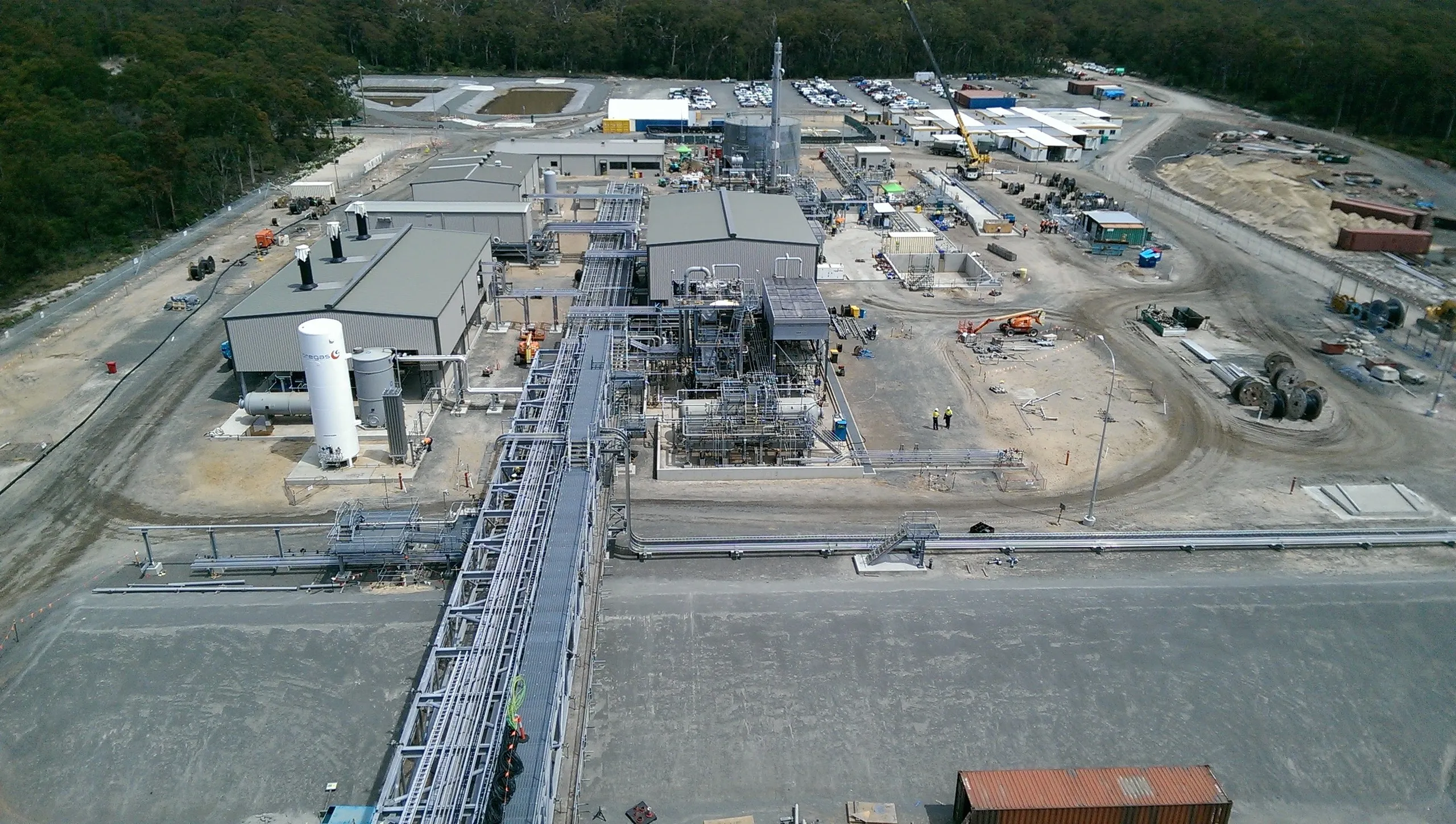
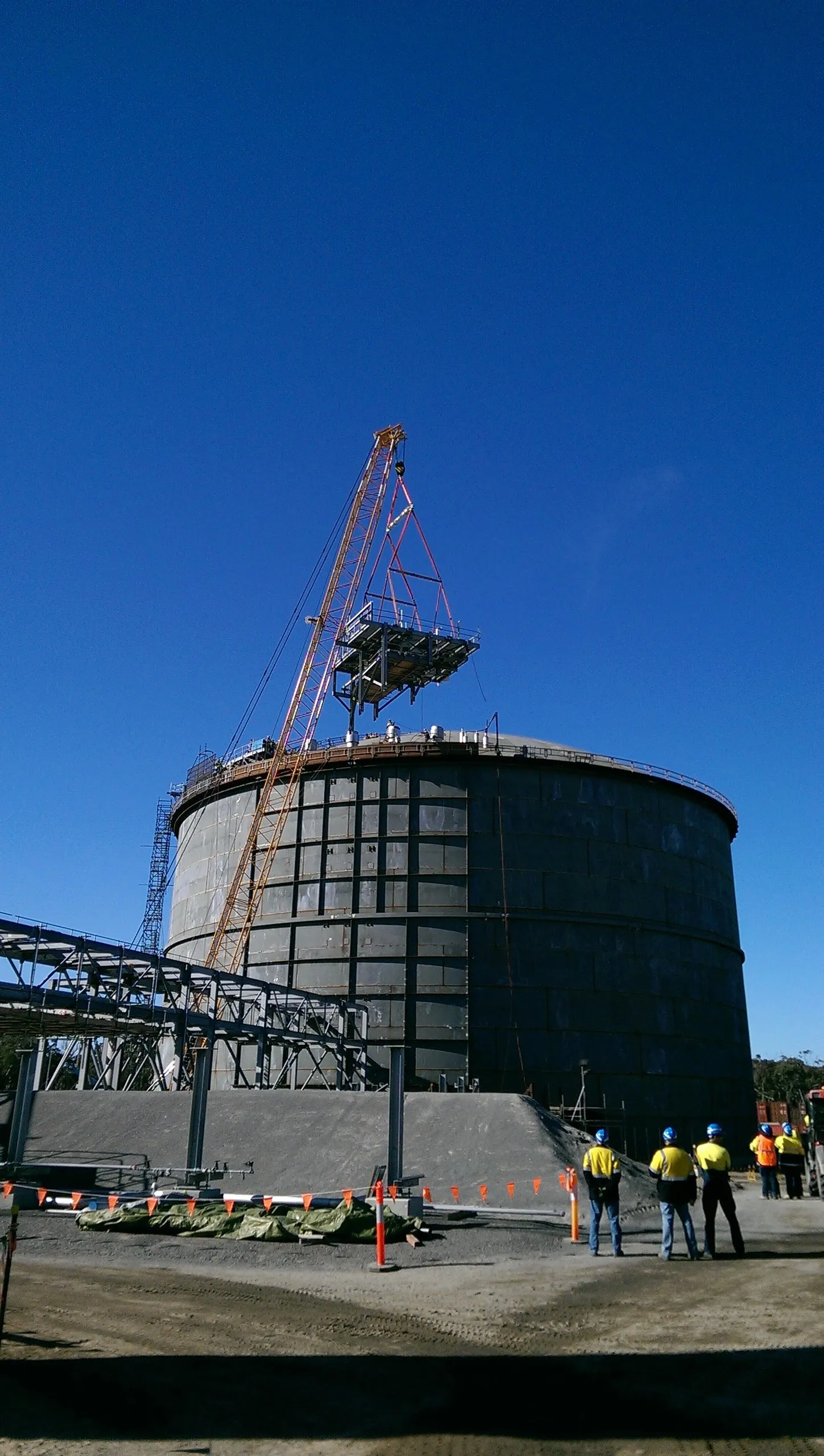
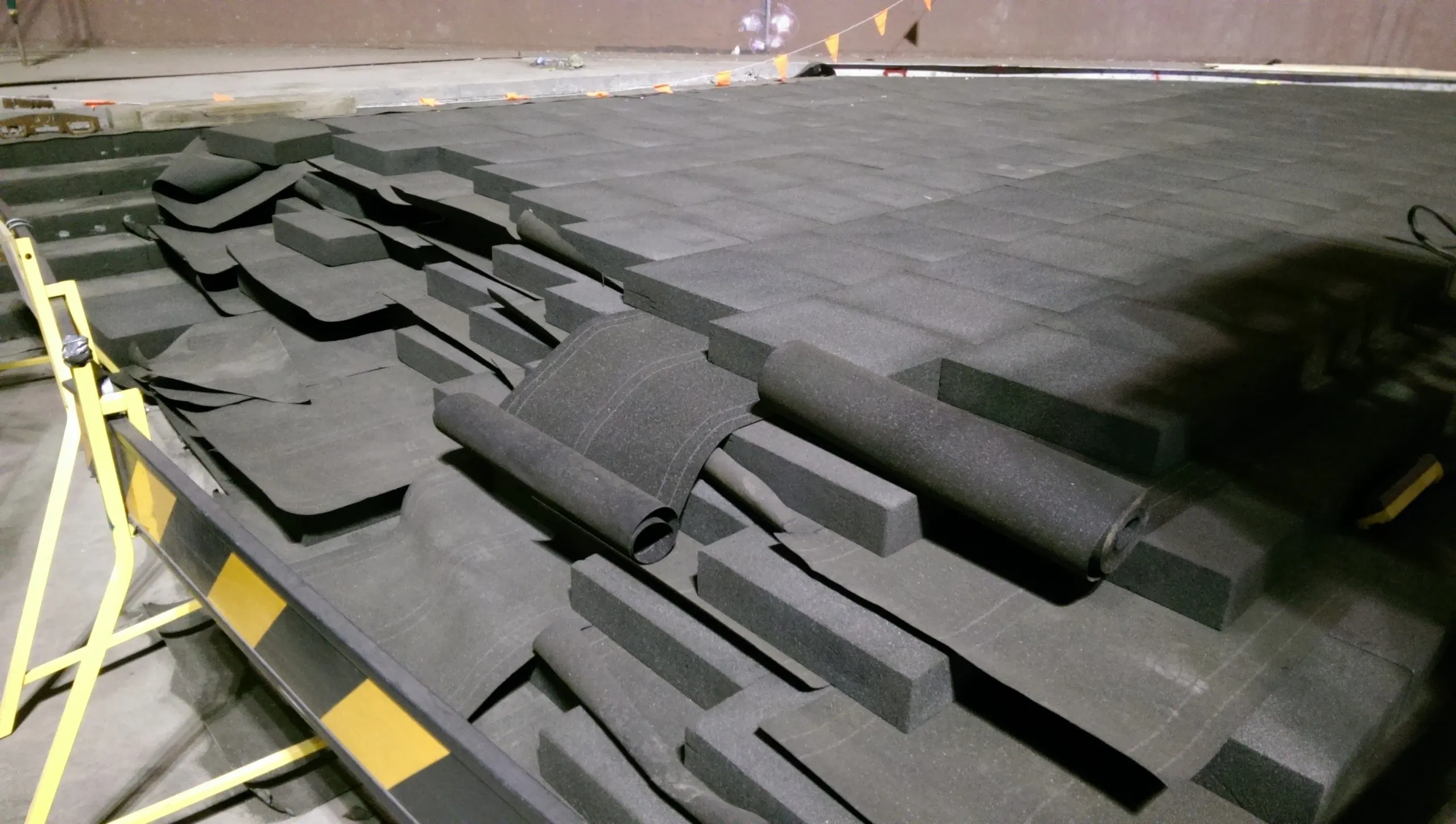
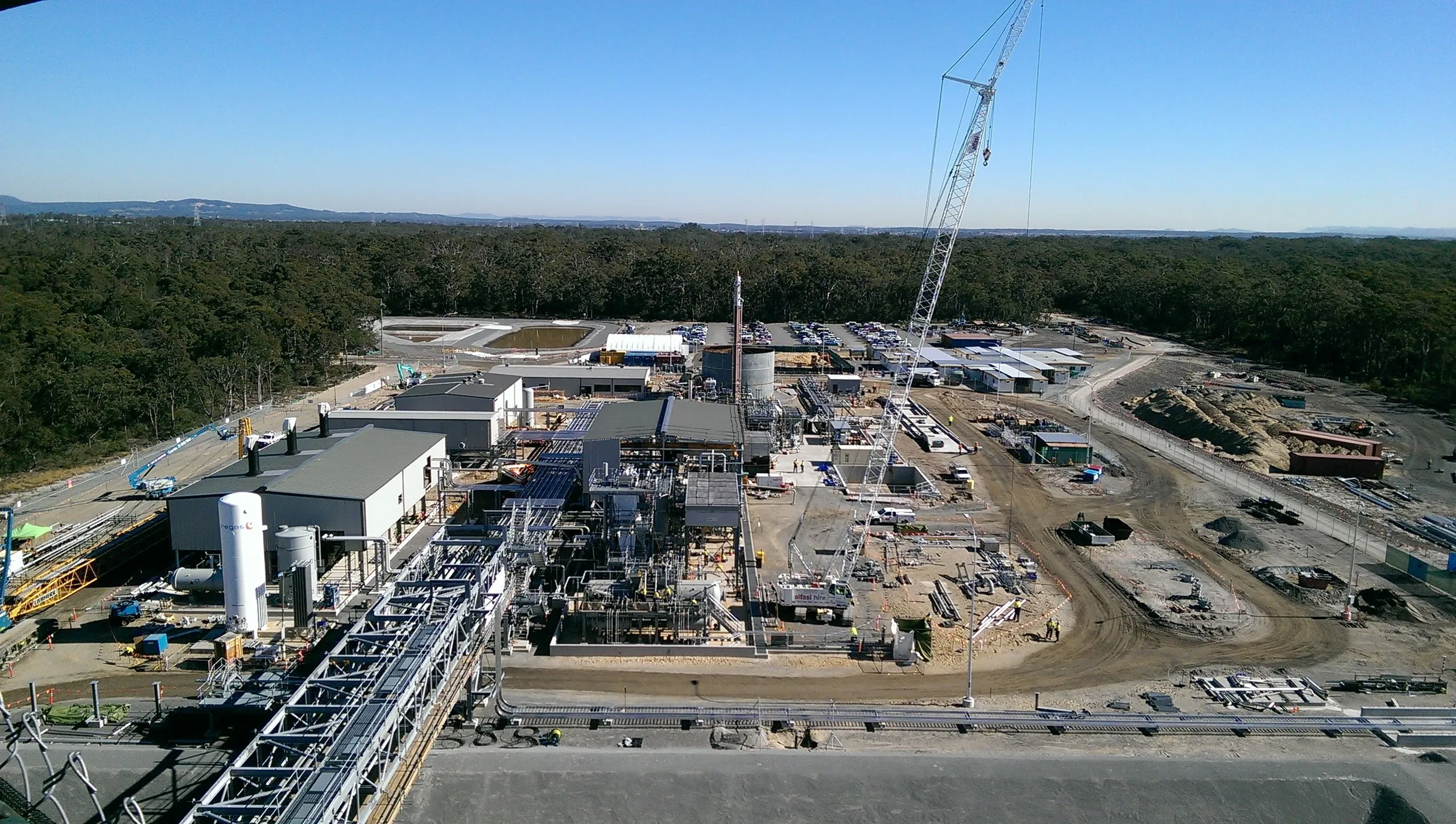
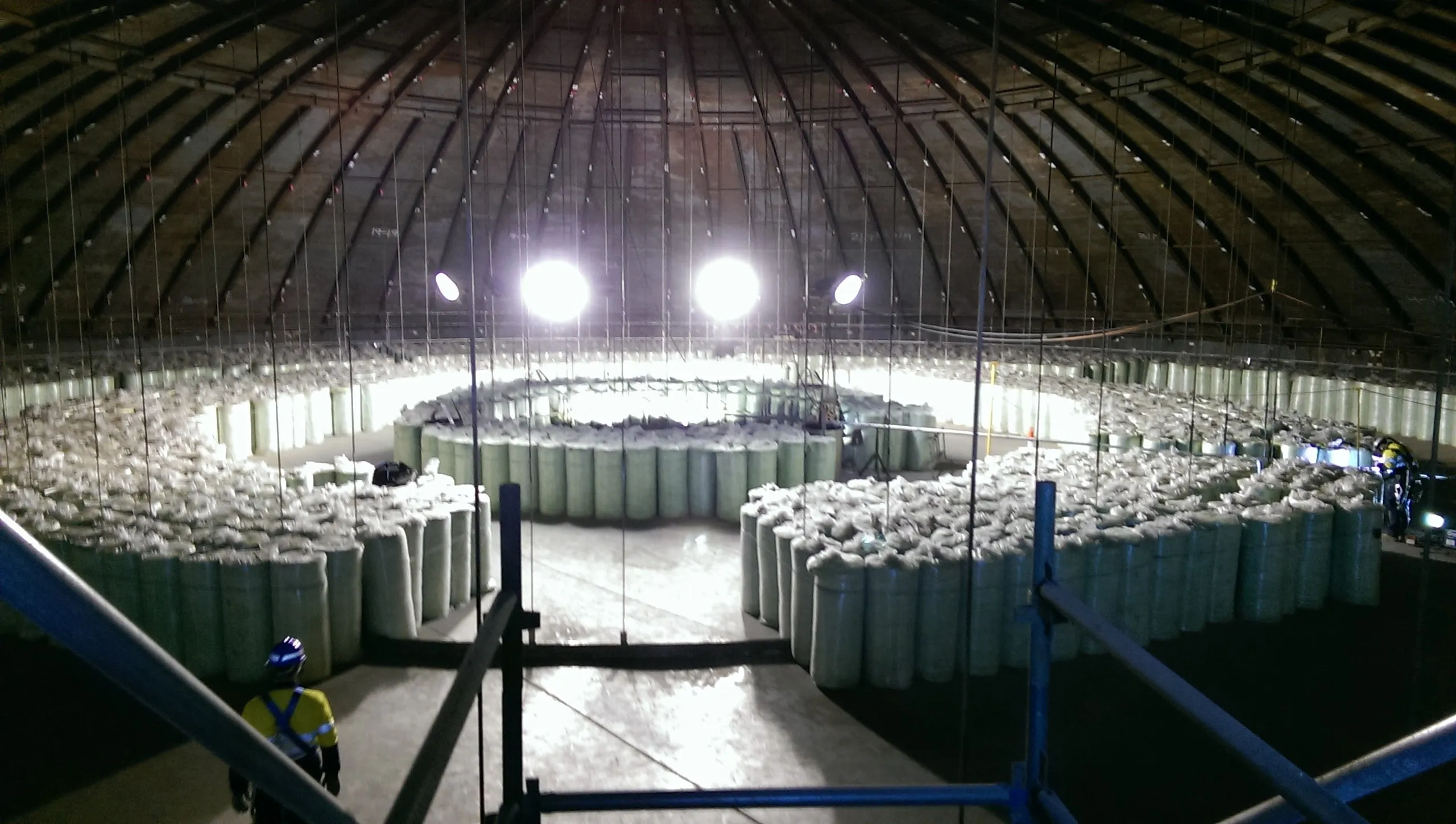
AGL NGSF Project - Tomago, New South Wales, Australia
What does this facility do?
The Newcastle Gas Storage Facility is a liquefied natural gas (LNG) peak shaver. Its purpose is to treat, liquefy, and store natural gas in the off season (summer months) and compress and re-vaporize the gas in the on season (winter months). It serves to reduce peak load on production facilities and pipelines.
The incoming natural gas is filtered, treated with an amine solution to remove carbon dioxide and dried through a desiccant bed before being chilled to -260F via a refrigeration cycle and pumped into a large double wall insulated storage tank. Both the amine process and the desiccant drying are continuously regenerated by burning a small amount of natural gas and heating up either the amine solution or the TSA (temperature swing adsorption) vessels.
The refrigeration cycle uses a complex mixture of hydrocarbons and a 5000 hp 3 stage centrifugal compressor. This cycle is closed-loop and works in a similar manner to your home or car air conditioning. The refrigerant (as a vapor) is compressed to high pressure and then run through a condenser. For the NGSF, the condenser is the size of a small house! This causes the refrigerant to liquefy and cool off. In a typical household refrigeration cycle, this refrigerant would be expanded (through an orifice or small valve) and then run directly through an evaporator where it could be used to cool air. When you’re cooling natural gas to -260F, you need to supercool the compressed refrigerant before expanding it. This is done through a plate-fin exchanger in a multi-flow arrangement. At the bottom (cold end) of the exchanger, the refrigerant is expanded and then allowed to vaporize as it travels back up to the top (warm end) of the exchanger and starts the cycle again. The natural gas exiting from the bottom of the exchanger is a super cooled vapor because it is still at high pressure. It flashes across a valve from high (pipeline) pressure to atmospheric pressure as it enters the storage tank. This flashing process liquefies the gas.
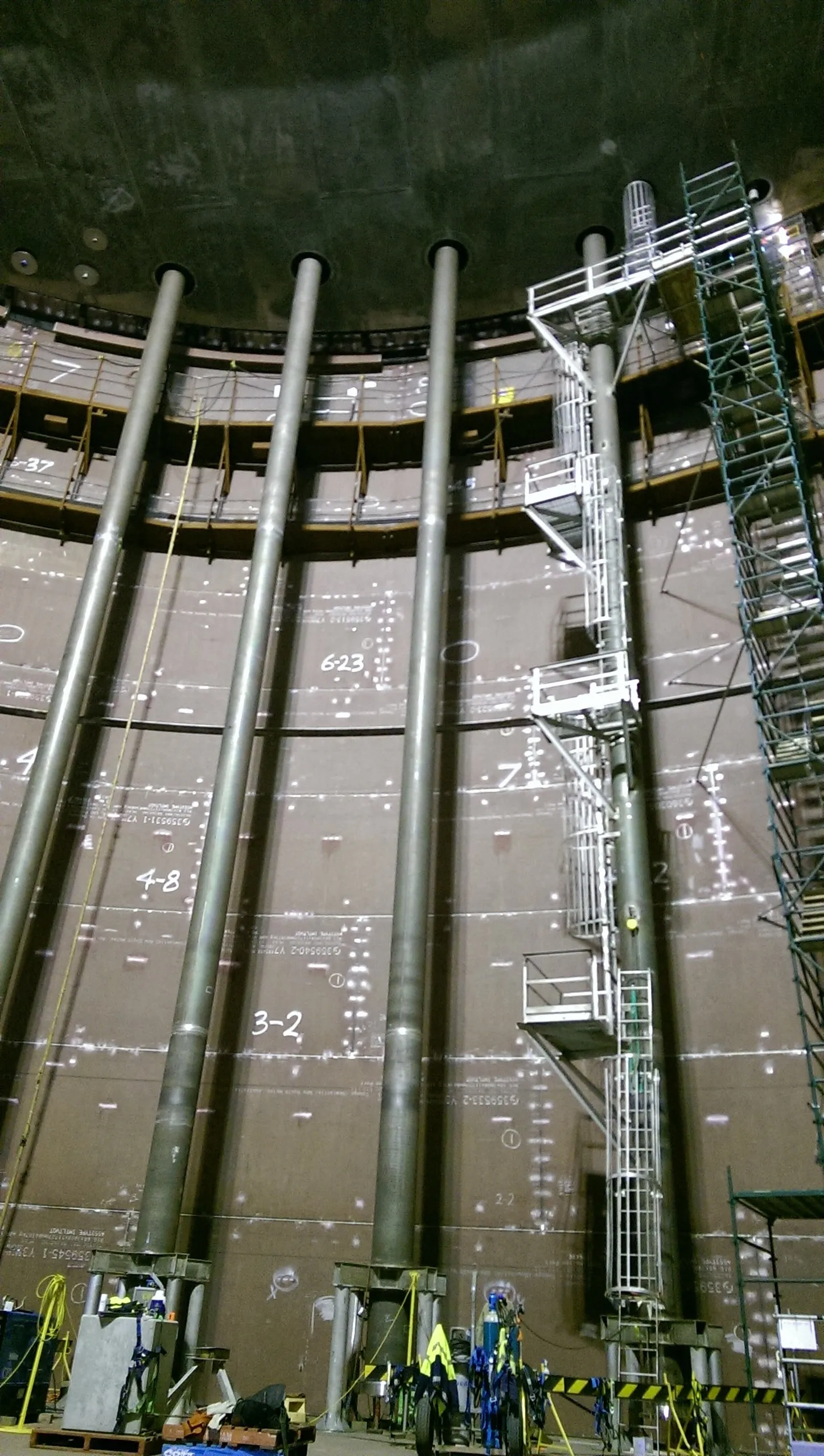
When gas demand is high, submersible cryogenic pumps inside the tank are used to compress the liquid natural gas which is then run through a shell-and-tube heat exchanger to bring it up to ambient temperature. The heat exchanger is heated using natural gas fired water heaters. Just for scale, these heaters are about the size of a small bus!
A side benefit of this facility is its ability to load LNG tanker trucks. LNG is a very low emitting and low carbon intensity fuel that can be used for a variety of applications including transportation and industrial uses.
My role in this project
My role was lead instrumentation and controls engineer. In this role, I was responsible from start to finish for the selection and purchasing of all instruments, automated valves, relief valves, fire and gas detection devices, and the control systems.
I also programmed, tested, and commissioned the control systems.
The NGSF was commissioned in 2015 and should operate for at least 30 years.